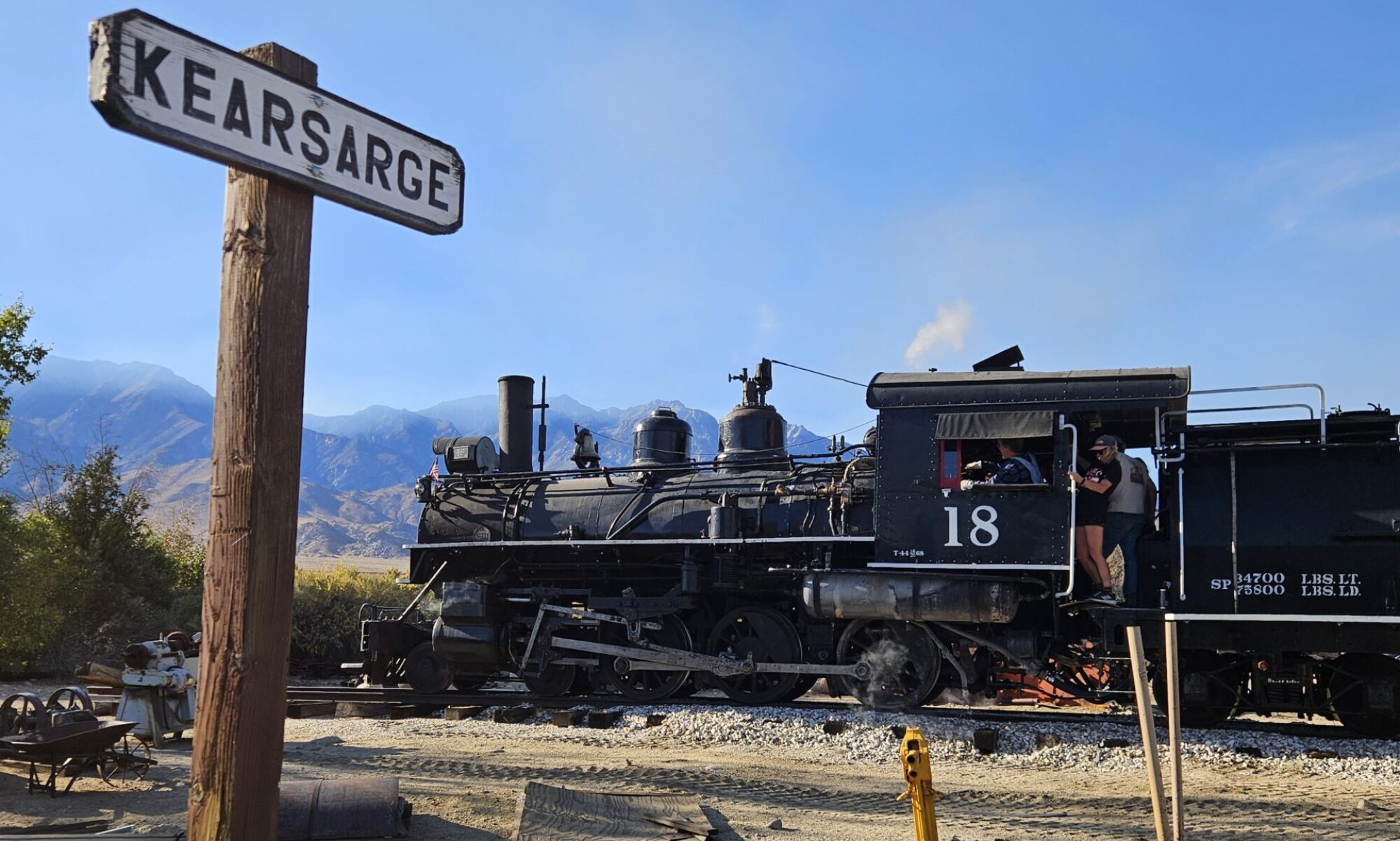
Mt. Montgomery is one of the more interesting areas of the narrow gauge to explore. At an elevation of just over 7000 feet at its summit, it was the most formidable natural obstacle on the entire route. In operation until 1938, the line twisted its way around and through the mountain. A 247 foot tunnel just below the summit was bored out of the rock. Today, the meandering right of way, lonely tunnel, and stacked rock retaining walls all remain, untouched by progress. The lack of rails, ties and the mournful sounds of the whistles being the only difference from a century ago.


Mt. Montgomery was not without its share of disaster, such as this 1923 wreck just below the summit. Today only a small pile of rusty metal remains.


Compared to the rest of the world, things are relatively unchanged on the eastern approach to Mt. Montgomery. Between Basalt and Summit, the railroad wound its way through the sagebrush to gain elevation. The pictures below were taken on this remote stretch of roadbed between Summit and Basalt in 2022 and 2025 respectively.


You must be logged in to post a comment.